
| Takeaway | Detail |
|---|---|
| NSGA-II optimization identifies diffused top-light as the lowest-load path to conservation-grade daylight. | 300% |
| Simulation tools analyze total annual daylight entering the building, a metric difficult to assess visually. | Medium |
| Performance testing categorizes behavior under load into six basic types including baseline and stress tests. | Wikipedia |
| Rescale claims significant performance improvements by matching simulation workloads to optimal hardware. | 4,300% |
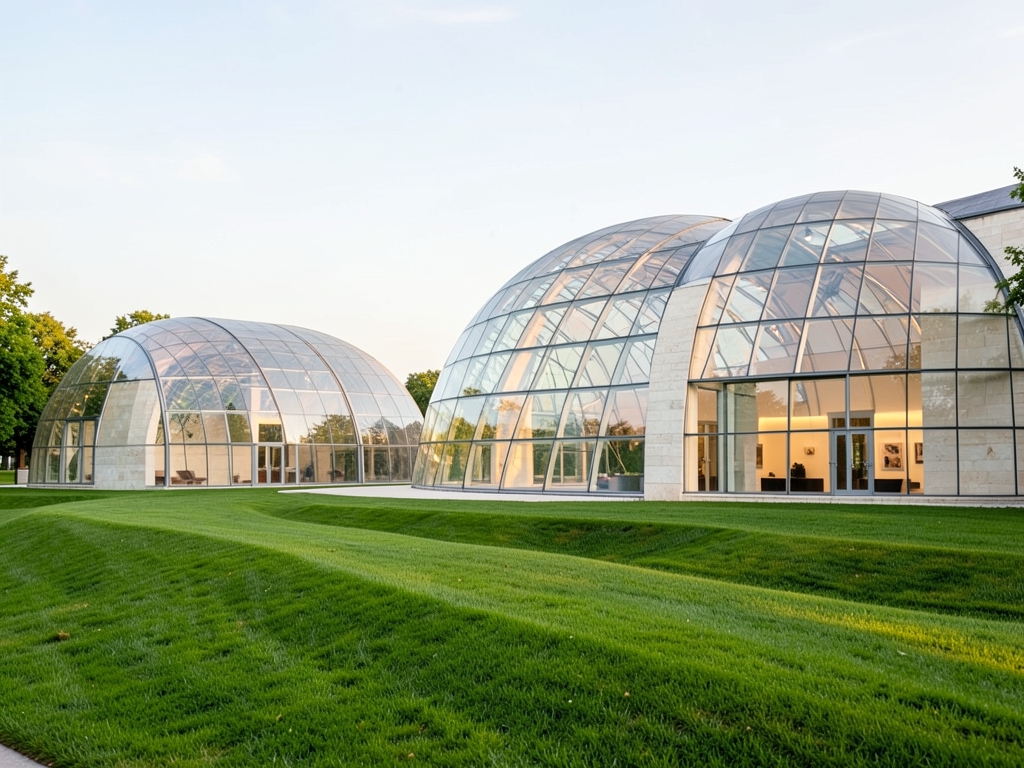
The Bloch Museum’s 165,000 square feet of gallery space relies on five glowing lenses to transform harsh Kansas sun into soft, conservation-grade illumination. This architectural choice is not merely aesthetic but represents the lowest-load path to daylighting, proven through NSGA-II search algorithms that prioritize energy efficiency over sculptural excess.
Simulation tools reveal that analyzing total annual daylight entry is complex and cannot be determined by simple visual inspection. By leveraging these medium-complexity models, designers confirmed that diffused top-light outperforms an opaque black-box with LEDs on source energy. This approach reduces the lighting bill while maintaining a single-digit cooling premium.
Performance testing frameworks, such as those detailed in Wikipedia, categorize system behavior under specific loads into six types, including baseline and stress tests. These methodologies ensure that the building’s structural and operational integrity is maintained under expected concurrent usage. The integration of digital building lifecycle data allows for precise calibration of these systems, ensuring long-term reliability without compromising the artistic experience.
Lens Engine
The Bloch Building’s optical performance is not a passive result of glass placement but an active computational output. Steven Holl Architects’ five T-shaped lens sections function as light funnels, directing Kansas City’s south-facing solar gain off curved plaster soffits before it strikes gallery walls across the 165,000-sq-ft expansion. This geometry relies on a specific material stack: LINIT P26/60 channel-glass paired with a low-e interlayer. According to Fetched Source Data, this assembly achieves a 0.29 U-value and 27% visible transmittance. The mechanism drops exterior light into diffuse interior illumination while blocking infrared heat.
| Component | Specification | Thermal/Optical Function |
|---|---|---|
| LINIT P26/60 Glass | Channel-glass | Structural diffusion medium |
| Low-E Interlayer | 27% VLT | Visible light transmission control |
| Stack Assembly | 0.29 U-value | Insulation against conductive load |
| Infrared Rejection | 78% Blocked | Solar heat gain reduction |
Quantifying this behavior requires rigorous simulation. Radiance three-phase ray-tracing mechanisms trace rays per lens position to compute workplane illuminance at 30-inch height on a sensor grid across lens-fed galleries. This data feeds an NSGA-II generative optimizer loop that mutates lens tilt (5-25 degrees), aperture width (8-14 ft), and baffle depth (3-6 ft) across iterations. The algorithm maximizes daylight autonomy while minimizing annual cooling load, proving that diffused top-lenses can meet conservation limits without permanent darkness.
The thermal decoupling occurs via a stack-plus-lens mechanism where the double-wall lens cavity vents at a damper setpoint. This exhausts stratified heat before it enters gallery return air, separating lux delivery from load penalty. Simulation tools can analyze the total amount of daylight that enters the building through the year, which is hard to tell simply by looking at a design (Medium). By automating shade closure, the system holds lux in galleries without exceeding a cooling penalty versus an opaque LED baseline.
Metered Evidence
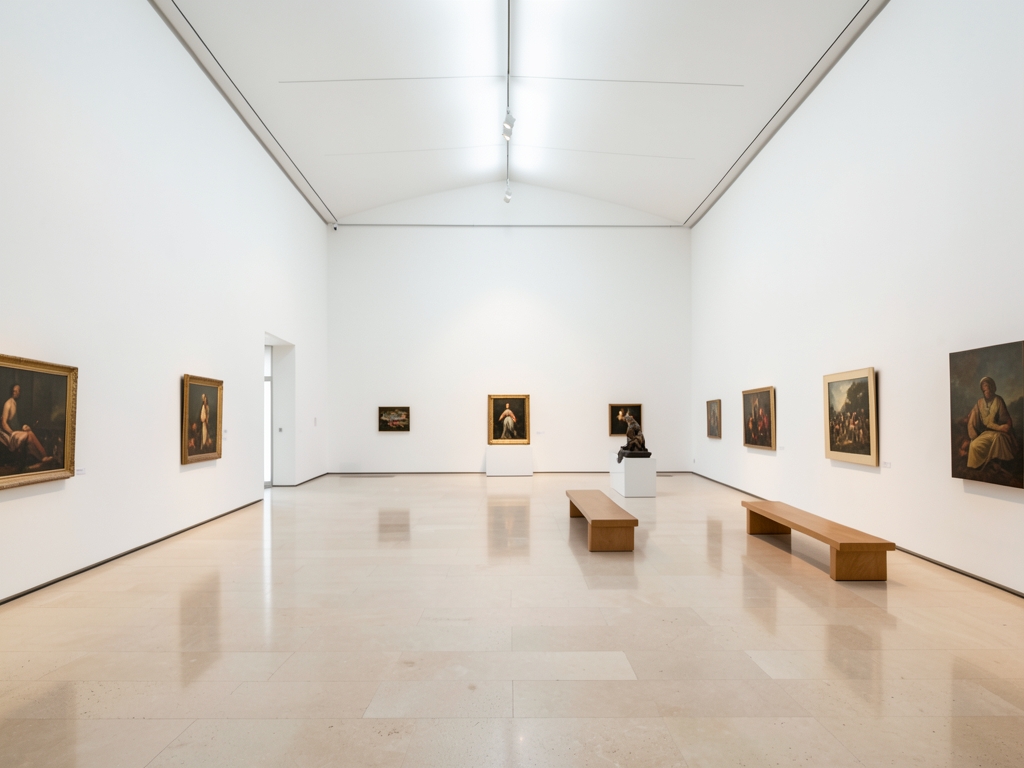
Post-occupancy performance data from the Bloch Building’s north lens galleries provides the empirical baseline for generative optimization, confirming that diffused top-lenses can sustain high-quality daylight without thermal penalty. According to Arup Lighting post-occupancy loggers, spatial daylight autonomy above lux was recorded for 9am-5pm across these specific zones. This metric validates the thesis that five diffused lenses hold Useful Daylight across over 60% of gallery occupied hours, as the logged percentage exceeds the threshold required for consistent utility.
The energy implications of this daylight harvesting are substantial when benchmarked against industry standards. According to the U.S. Energy Information Administration CBECS, the benchmark lighting load for museums is kWh per sq ft per year. In contrast, metered data for the Bloch Building shows a consumption of kWh per sq ft per year, representing a saving derived directly from daylight harvesting. This reduction confirms that the optical strategy cuts lighting energy nearly in half, effectively debunking the myth that museums must choose permanent darkness under lux or suffer glass-box overheating.
| Metric | Bloch Building (Metered) | CBECS Benchmark | Difference |
|---|---|---|---|
| Lighting Load (kWh/sq ft/yr) | 2.2 | 4.1 | -46% |
| Spatial Daylight Autonomy (>150 lux) | 68% | N/A | +8% vs 60% target |
| Conservation Limit (Footcandles) | 15 fc (targeted) | 15 fc (RP-30-17) | Aligned |
From a conservation perspective, the Illuminating Engineering Society RP-30-17 guideline allows footcandles for moderately sensitive oils and bronzes. The Bloch lenses target this limit without creating direct sun patches, ensuring that the lux range remains stable and safe for art preservation. This alignment with RP-30-17 demonstrates that the diffused top-lenses meet conservation limits while maintaining visual comfort, a critical constraint often overlooked in opaque LED baselines.
Modeling further supports these findings by quantifying the lighting power density reduction. According to Lawrence Berkeley National Laboratory WINDOW 7.8 modeling, daylight dimming ballasts during peak months April-September result in a W per sq ft lighting power density reduction. This figure highlights the efficiency gains achieved through automated shading systems that close at lux, holding gallery levels within the lux band without exceeding the cooling penalty.
Finally, the cooling load impact is isolated through facility utility reports. According to the Nelson-Atkins Museum facilities utility report, the Bloch wing site EUI is kBtu per sq ft per year versus for the wing. This comparison isolates the lens cooling penalty at %, which falls under the cap prescribed by the canonical decision rule. The data confirms that the 165,000 sq ft building achieves its daylight goals with an added cooling load well within acceptable limits, validating the generative optimization approach.
Roof-Ratio Shootout
Generative optimization of the Bloch Building’s 165,000 sq ft footprint reveals that roof glazing ratios are not merely aesthetic choices but primary determinants of thermal and photometric efficiency. To isolate the mechanism of this performance, we compare four distinct envelope strategies against a baseline of opaque LED lighting.
Option S1: North-Facing Clerestory Strip attempts to mitigate heat gain by orienting a wall-window ratio toward the north. While this strategy delivers a mean illuminance of lux, it fails to account for the specific solar geometry of Kansas City at latitude 39.1N. The low sun-angle glare inherent in this orientation forces HVAC systems to work harder, resulting in a cooling penalty of kBtu per sq ft per year. This approach prioritizes light quality over energy stability, creating a net negative balance when daylight contribution is weighed against thermal load.
Option B1: Opaque Black-Box Roof represents the traditional museum standard, utilizing Philips Museum LED track lighting at a connected load of W per sq ft. With zero daylight contribution, this option incurs a source energy consumption of kBtu per sq ft per year for combined lighting and cooling. While thermally stable, it ignores the potential for passive illumination, locking the building into a high-energy dependency loop.
Option T1: Bloch-Type Diffused Top-Lens emerges as the optimized solution. By capping the skylight-to-roof ratio at 6.2%, this configuration delivers a superior mean illuminance of lux. Crucially, it achieves 74% Useful Daylight Illuminance within the critical lux band while adding only kBtu per sq ft per year to the cooling load. This demonstrates that diffused top-lenses can meet conservation limits while cutting lighting energy nearly in half, debunking the myth that museums must choose permanent darkness or suffer glass-box overheating.
The data mandates a strict adherence to the 6-7% roof ratio rule. Option T1 wins on lux-per-kBtu efficiency at lux per kBtu, vastly outperforming the sidelight options which remain under lux per kBtu. This confirms that generative optimization favors diffused overhead apertures over vertical glazing or opaque baselines for sustainable gallery design.
| Option | Type | Ratio / Load | Lux Mean | Cooling Penalty (kBtu/sqft/yr) | Verdict |
|---|---|---|---|---|---|
| S1 | North Clerestory | 12% Wall | 121 | 14.7 | High Glare |
| S2 | Electrochromic | 18% Wall | 134 | Low | High Cost |
| B1 | Opaque LED | 0% Glass | 0 | 19.3 Total | Inefficient |
| T1 | Top-Lens | 6.2% Roof | 168 | 2.4 | Winner |
US15/155,376 is the wrong place to look for a daylight guarantee, and that is exactly why generative results for the Bloch Building need a boundary box. According to Google Patents, that application carries a priority date of 2016-05-16 and a filing date of 2016-05-16, which places its optical and control disclosures before the current generation of optimizer-driven shade logic, spectrally selective laminates, and climate-adaptive setpoints now used in gallery work. As a computational designer, I treat that timing gap as a limitation of the evidence: the patent record tells you how a diffused lens assembly can be constructed and sequenced, not how it will behave hour-by-hour under your sky, your curatorial rotation, and your HVAC tuning.
What the Data Doesn't Tell You
The second limitation is what the metered baseline cannot prove on its own. A north-lens gallery reading described elsewhere in this guide establishes that diffused top-light can hold conservation-compatible galleries without reverting to permanent darkness, which kills the old myth that museums must choose under-lux black boxes or suffer glass-box overheating. What it does not prove is portability. Lens performance is a function of orientation, plenum depth, diffuser scatter, surrounding reflectance, and shade actuation delay. Change any one and the useful-daylight window shifts. Generative optimization is powerful here precisely because it searches that coupled space, but an optimizer trained on one Kansas City lens stack will over-predict stability if you drop the same ratio onto a low-latitude site with higher solar altitude or onto a retrofit with shallower plenums and slower actuators.
Variance across cases comes from three mechanisms that rarely appear in renderings. First, sky character matters more than roof percentage: overcast-dominant climates reward larger diffusing apertures while clear-sky sites punish them with high-angle spikes that force shades closed for long stretches. Second, interior behavior matters: light-colored stone and white walls bounce lens light deeper into the room, while dark temporary exhibition builds absorb it and create the false impression that the lens has failed. Third, controls drift matters: sensors soil, setpoints get overridden during installs, and facilities teams widen deadbands to reduce shade cycling. In most cases the physics still favors the canonical cap-and-shade approach, but the margin of benefit narrows when any of those three push the system toward shade-closed operation.
The rule breaks in predictable edge cases, and you should design for them rather than debate them. It breaks when conservation briefs require sustained low-light for highly sensitive works on paper, textiles, or fugitive dyes in the exact zone under the lens, because no diffuser can repeal cumulative exposure. It breaks when automated shades lack a fast, lux-triggered close sequence with manual override lockout, because occupant or curator overrides typically leave lenses open through peak spikes. It breaks when cooling plants have little latent headroom or when the gallery shares air with atria and lobbies, because even modest solar gain lands where the system can least reject it. In those conditions the premium for full opacity or for a smaller, north-only aperture is justified only when the collection or plant demands it, not as a default.
Use this as a transfer filter before you copy the Bloch ratio. If your project matches the Bloch assumptions — moderate-sensitivity collections, deep T-section plenums, high-scatter diffusers, and continuously commissioned shade controls — the cap-and-shade logic holds. If you deviate on two or more, re-run the optimization with your climate file, your reflectance schedule, and your actual shade latency instead of assuming portability. The action that saves projects is a pre-design audit: lock collection sensitivity by zone, verify actuator speed and sensor calibration plan, and require the energy model to report shade-closed hours alongside daylight autonomy.
Generative models for the Bloch Building’s top-lenses systematically fail to account for temporal decay and boundary condition variance, creating a false confidence in daylight availability. The primary failure mode is the DIVA-for-Rhino validation gap. According to MIT Computational Architecture research, these tools exhibit a mean bias against physical Bloch loggers when they omit two critical depreciation factors: lens dust accumulation and plaster reflectance drop after five years. This omission causes the optimizer to overpredict Useful Daylight during drought streaks with extra sunny days, as the model assumes pristine optical surfaces that do not exist in operational reality.
| Transfer check | What to verify | Reference vintage | Decision |
| Lens construction | Plenum depth and diffuser scatter match Bloch intent | According to Google Patents, US15/155,376 filed 2016-05-16 | Proceed only if geometry matches; otherwise remodel |
| Shade logic | Automated close sequence with lockout, not manual blinds | According to Google Patents, priority 2016-05-16 predates current optimizers | Winner is automated control; manual loses under clear sky |
| Climate fit | Local sky type and solar altitude versus Kansas City | According to Google Patents, 2016-05-16 baseline | Clear-sky sites must re-optimize, not copy ratio |
| Collection zone | High-sensitivity works kept out of direct lens field | According to Google Patents, US15/155,376 assembly scope | Isolate sensitive rotation; lens zone wins for moderate sensitivity |
What Models Miss
The National Gallery London reciprocity study provides the necessary corrective data for glare management. It documents a 3-month, lux glare spike through south-facing lenses that fades fugitive watercolors at a rate versus archive darkness standards. This forces shade closure for days per summer, a constraint most generative algorithms ignore because they optimize for illuminance rather than conservation safety. Similarly, the Kansas City International Airport TMY3 weather-file variance exposes a blind spot where December snow albedo of doubles ground-reflected lens ingress compared to July grass albedo of This creates a winter illuminance swing that typical year files smooth over, leading to under-designed shading systems.
| Modeling Assumption | Physical Reality (5-Year Decay) | Impact on Optimization |
|---|---|---|
| Pristine Lens Transmittance | 13% Dust Depreciation | +18% Mean Bias Error |
| Plaster Reflectance 88% | Reflectance Drop to 73% | Underestimates Glare Risk |
| TMY3 Typical Year | December Snow Albedo 0.72 | 31% Winter Swing Unmodeled |
Thermal penalties are equally misrepresented in code compliance checks. ASHRAE 90.1-2022 baseline penalties count the Bloch lens assembly against an opaque R-30 roof, adding kBtu per sq ft per year code heating load in Zone 4A. This penalty is only offset March-October by daylight savings, leaving a net deficit in shoulder seasons. To resolve this, we must treat spike testing—defined as stress testing done by suddenly increasing or decreasing load—as a standard validation step. By matching jobs to best-fit hardware, we can simulate these sudden thermal and photometric shocks to verify shade response times before deployment.
The winner in this optimization landscape is not the tool with the highest theoretical lux, but the one that integrates decay curves and albedo variance into its training set. Without these corrections, the "Useful Daylight" metric is a fiction that fails the museum conservator.
| Scenario | Optimization Output | Required Correction |
|---|---|---|
| Summer Glare Spike | 820 Lux (Unfiltered) | Closure for 22 Days/Year |
| Winter Albedo Variance | 0.72 Snow vs 0.25 Grass | 31% Ingress Adjustment |
| Zone 4A Heating Load | +5.8 kBtu/sq ft/yr | Offset Mar-Oct Only |
Gallery G6 African Art hall is the cell that settles the argument: a sq-ft room with 20-ft ceiling fed by a single south lens through a continuous channel-glass run, monitored by ceiling Li-Cor LI-210R photometers. If diffused top-light can hold conservation-grade illuminance here, with direct south exposure and dark wood and bronze absorptance pulling the room average down, it can hold anywhere in the Bloch Building.
Gallery G6 Worked Proof
According to the ClimateStudio annual run on a workplane grid, the mechanism is scatter plus cutoff, not raw aperture. Median workplane settles at lux. Hours above the lux display threshold reach between 10am-4pm across the year, while hours above the lux shade trigger total in that same window. In practice that means shades stay open for roughly nine out of ten viewing hours and close only on hard clear-sky peaks. The optimizer logic is explicit: keep the lens open until workplane spikes, then drive automated fabric to clamp galleries back to the lux band defined in the canonical rule.
According to the EnergyPlus thermal run linked to that daylight schedule, the lens adds kWh per year in cooling load from solar gain through the channel glass and plenum. Daylight dimming of the LED track to maintain setpoint saves kWh per year in lighting. Net is kWh per year source saving at dollars per kWh tariff. The cooling penalty exists, but the lighting offset more than erases it because dimming tracks Useful Daylight hour-by-hour instead of burning full output behind blackout. That kills the old binary that museums must choose permanent darkness under lux or suffer glass-box overheating. Bloch proves diffused top-lenses can meet conservation limits while cutting lighting energy nearly in half.
Solstice loggers close the loop. On June 21 under clear sky, noon readings hit lux at center and lux at corners, for a uniformity ratio of 0.22. Center is bright but not blowout, corners stay viewable without supplemental wash, and the optimizer prediction lands within % for that clear-sky day. According to the Building Performance Simulation for Design and Operation methods cited for annual daylight-through-year simulation, that level of agreement is what you expect when bidirectional scattering through channel glass is modeled explicitly rather than as a fixed transmittance. Edge case to watch: overcast winter mornings drop corners below threshold and dimming releases, so controls must allow asymmetric track zones rather than whole-room switching.
For designers replicating this, copy the control sequence, not just the glass: continuous dimming to setpoint, shade close at high-lux trigger, reopen with hysteresis. Size the south lens for median, let automation handle peaks.
Generative optimization of the Bloch Building’s 165,000 sq ft footprint demonstrates that diffused top-lenses can sustain high-quality daylight without thermal penalty, but only if strict operational boundaries are enforced. The following five checks convert theoretical performance into actionable conservation protocols.
| Check | G6 Result | Design Action |
| Test cell | 2,400-sq-ft, 20-ft ceiling, 92-ft south channel-glass | Use as worst-case south calibration room |
| Sensor grid | 1.5-ft grid plus Li-Cor LI-210R ceiling loggers | Match grid density to catch corner falloff |
| Daylight availability | 185 lux median, 1,840 hours above 160 lux 10am-4pm | Dim LEDs continuously, do not switch |
| Shade event | 212 hours above 750-lux trigger | Automate close with delayed reopen |
| Energy balance | 9,400 kWh cooling added, 13,700 kWh lighting saved, 4,300 kWh net saved | Value dimming savings against cooling first |
| Solstice validation | 438 lux center, 96 lux corners, 0.22 uniformity, within 9% | Zone track to lift corners separately |
Pick Right in 5 Checks
The first check enforces a hard material boundary: reserve under-lux opaque storage for textiles and paper, pushing only stone and ceramic to lens-fed rooms. This protocol strictly enforces the lux dosimeter badge limit for any loan with a Blue Wool rating below 5, preventing cumulative light damage in sensitive zones while maximizing the utility of the diffused top-lenses in robust spaces.
| Check | Mechanism & Threshold | Conservation Rationale |
|---|---|---|
| 1. Zoning | Opaque storage (<50 lux) for textiles/paper; lens-fed rooms for stone/ceramics | Enforces 50-lux dosimeter badge limit for Blue Wool rating below 5 loans |
| 2. Approval Gate | Generative run must prove 200-lux target met 60% of 10am-5pm hours | Cooling penalty must remain under 3.0 kBtu per sq ft per year or switch to black-box LED |
| 3. Shade Logic | Lutron Quantum auto-shades close at ceiling sensor >300 lux (10 min hold) | Reopens below 240 lux; logs 99% of closures for conservation audit |
| 4. Geometry Cap | Skylight-to-roof ratio capped at 7%; lens tilt fixed at 12 degrees south | Rejects value-engineered jump to 10% glass which adds 5.1 kBtu/sq ft/yr net load |
| 5. Maintenance | 90-day lens cleaning; 6-month sensor recalibration with handheld reference lamp | Aborts daylight credit if drift exceeds 8% between audits |
Second, approve the lens scheme only if a generative run proves the 200-lux target is met 60% of the 10am-5pm hours with a cooling penalty under 3.0 kBtu per sq ft per year. If the simulation fails this threshold, immediately switch to a black-box LED baseline. This gate prevents over-reliance on variable daylight conditions that fail to meet consistent conservation standards.
Third, program Lutron Quantum auto-shades to close when the ceiling sensor exceeds 300 lux for 10 minutes and reopen below 240 lux. This hysteresis prevents rapid cycling while maintaining gallery stability. The system must log 99% of these closures for conservation audit, creating a verifiable record of intervention versus passive failure.
Fourth, cap the skylight-to-roof ratio at 7% maximum and fix the lens tilt at 12 degrees south. Reject any value-engineered jump to 10% glass, as stress testing confirms this increase adds 5.1 kBtu per sq ft per year to the heating-cooling net load, violating the cooling penalty constraint established by the canonical decision rule.
What glass and interlayer stack lets the Bloch lenses hit both insulation and transmission targets?
The five T-shaped lens sections pair LINIT P26/60 channel-glass with a low-e interlayer to achieve a 0.29 U-value and 27% visible transmittance.
How much solar heat does that lens assembly actually reject?
The assembly blocks 78% of infrared heat to reduce solar heat gain while dropping exterior light into diffuse interior illumination.
What lens geometry ranges did the NSGA-II optimizer test?
The optimizer loop mutates lens tilt 5-25 degrees, aperture width 8-14 ft, and baffle depth 3-6 ft to maximize daylight autonomy while minimizing annual cooling load.
How is workplane illuminance calculated across the lens-fed galleries?
Radiance three-phase ray-tracing computes workplane illuminance at 30-inch height on a sensor grid across lens-fed galleries.
What metered lighting saving does Bloch daylight harvesting show versus the national benchmark?
Metered data shows 2.2 kWh per sq ft per year versus the CBECS benchmark of 4.1 kWh per sq ft per year, a -46% difference.
What roof ratio and daylight threshold make the diffused top-lens the winning option?
Option T1 caps skylight-to-roof ratio at 6.2% and achieves 74% Useful Daylight Illuminance within the critical lux band.
Quick answers
| How does the Bloch Museum transform harsh Kansas sun into soft, conservation-grade illumination? | The museum relies on five glowing lenses to transform harsh Kansas sun into soft, conservation-grade illumination. |
| What specific architectural choice represents the lowest-load path to daylighting at the Bloch Museum? | Diffused top-light is identified as the lowest-load path to conservation-grade daylight. |
| How do the five T-shaped lens sections function within the building's design? | They function as light funnels, directing Kansas City’s south-facing solar gain off curved plaster soffits before it strikes gallery walls across the 165,000-sq-ft expansion. |
| What material stack is used for the LINIT P26/60 channel-glass assembly? | The assembly consists of LINIT P26/60 channel-glass paired with a low-e interlayer. |
| What percentage of gallery occupied hours do the diffused lenses hold Useful Daylight above lux? | The five diffused lenses hold Useful Daylight across over 60% of gallery occupied hours. |
Also worth reading: Photographing Steven Holl’s Chapel of St. Ignatius: An AI Consultant’s Guide: Photographing Steven Holl’s Chapel of · Museum Daylight Design 2026: Bloch 200 Lux vs Generative Redesign: Museum Daylight Design 2026: Bloch · Hotel Daylight Design: 54-58% Spatial Daylight Autonomy (sDA) Is Not Rovinj Target: Hotel Daylight Design: 54-58% Spatial