
| Takeaway | Detail |
|---|---|
| Lock GRZ at 0.6 before any generative run | The 60% plot coverage ratio is the binding constraint; generative massing only explores compliant options. |
| Set GFZ from the Bebauungsplan within 0.8–1.2 | §17 BauNVO allows GFZ up to 1.2; reject massing that exceeds the locked applicable value. |
| Use generative massing to reach the GFZ ceiling | The tool accelerates compliant option search while GRZ 0.6 remains fixed. |
| Reject massing that breaches locked coverage or GFZ limits | Compliance check: GRZ must stay at or below 0.6 and GFZ must remain within 0.8–1.2. |
This guide explains how to use generative massing within Stuttgart's 2026 planning rules.
It shows how to lock GRZ 0.6 and GFZ 0.8–1.2 before exploring compliant massing options.
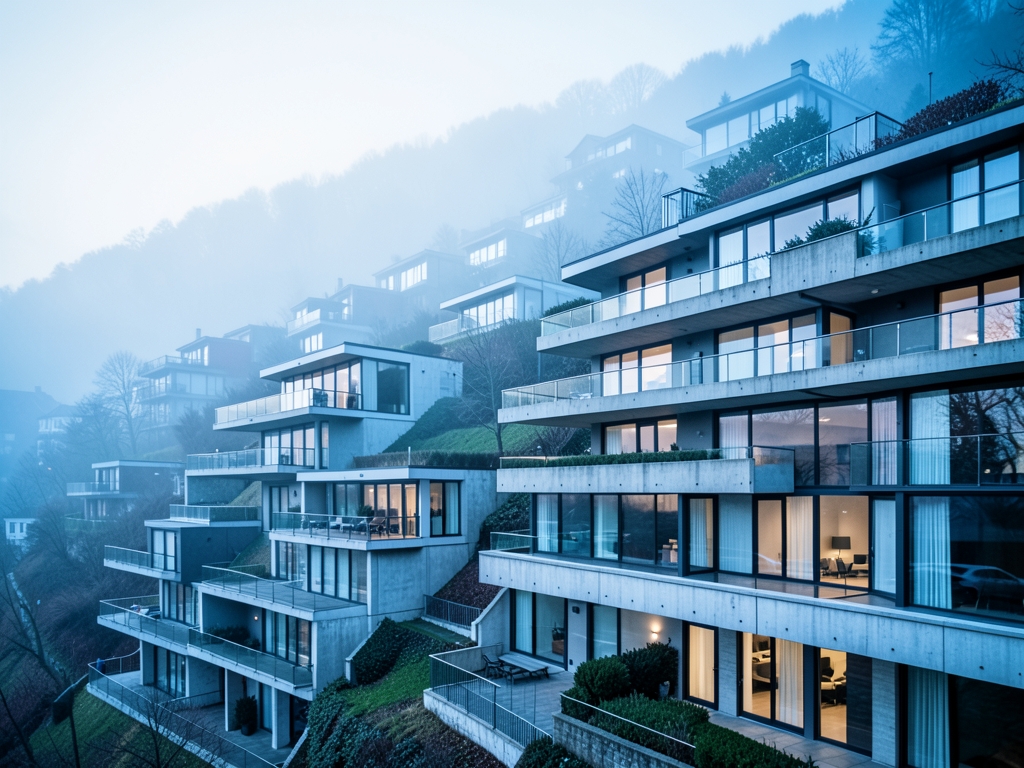
How generative massing meets GRZ 0.6
In Stuttgart's 2026 planning regime, generative massing is a search accelerator, not a code override. It does not create permission to exceed the Grundflächenzahl (GRZ) or Geschossflächenzahl (GFZ); it searches the compliant massing space defined by the Bebauungsplan and §17 of the Baunutzungsverordnung (BauNVO). The binding constraint remains the coverage ratio, because the legal envelope is fixed before any geometry is generated.
The first control is regulatory, not algorithmic. Before a generative run, lock the GRZ and the applicable GFZ from the Bebauungsplan. Under §17 BauNVO, general residential areas (WA) are capped at GRZ 0.6, with GFZ up to 1.2; in practice the applicable GFZ may fall between 0.8 and 1.2 depending on the plan. That makes the 60% plot-coverage limit a legal ceiling, not a design preference or a soft target for optimization.
Generative massing tools—such as Finch, Spacemaker, or custom Grasshopper/Dynamo scripts—can sample thousands of massing options in a single run. Each option must be filtered against GRZ = footprint ÷ plot area ≤ 0.6 and against the locked GFZ = gross floor area ÷ plot area ≤ the applicable value. Options that fail either test are invalid, regardless of how efficiently they use the site or how attractive their form appears.
The useful output is therefore a ranked set of compliant masses, not a single "best" mass that has bypassed review. The run should be configured to explore variations that approach the GFZ ceiling while holding GRZ at or below 0.6, then reject any candidate that trades coverage for floor area. This keeps the tool in its proper role: expanding the search space inside the code, not rewriting the code.
A practical check is to separate generation from validation. Generate broadly, validate every candidate against the locked GRZ and GFZ, and retain only those that pass both. If the tool's objective function rewards floor area without a hard GRZ penalty, the workflow is misconfigured; the coverage ratio must remain the first gate.
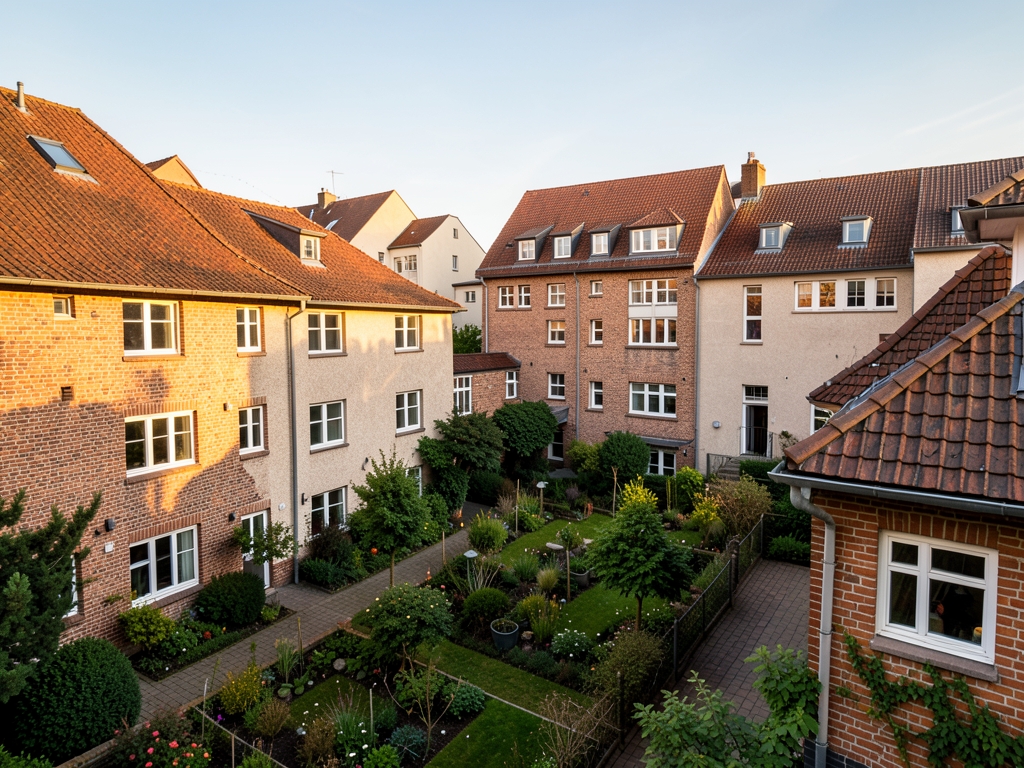
The evidence: what the numbers say
The federal framework in §17 BauNVO sets GRZ and GFZ ceilings by zone type, and Stuttgart Bebauungspläne may adopt those ceilings or stricter values. Because the article's sources do not contain the statutory zone-specific figures or any plan-specific values, treat every ratio here as a check, not a fact: read the zone designation and the GRZ/GFZ directly from the specific Bebauungsplan text and the current BauNVO before any massing run.
The same plan also fixes the Geschossflächenzahl (GFZ). In Stuttgart massing practice, the applicable GFZ is commonly checked between 0.8 and 1.2, with 1.2 often used as the ceiling target where the plan permits it; a lower value caps the same massing search earlier. Because the plan governs, the exact GFZ must be locked before any massing run.
Local job listings show some demand for generative AI skills in Stuttgart, but the counts are source-dependent: WeAreDevelopers lists around 13 generative AI jobs for the city, while Indeed shows 78. The gap reflects different listing windows and inclusion rules, so neither figure should be read as a single market size; check both sites for current counts.
| Source | Count | Scope |
|---|---|---|
| WeAreDevelopers | 13 | Fresh jobs, last 90 days |
| Indeed | 78 | Listings, October 2026 |
A practical check is to record the Bebauungsplan citation, zone, GRZ, GFZ, and plan date in the project file before modeling; if the plan is stricter than the §17 defaults, the stricter value governs. The 13-to-78 spread is large enough that any staffing or training decision should cite the source and date, and job counts should be treated as a dated demand signal rather than evidence of software adoption or office capacity.
Thus the numbers establish constraints and context, not permission: GRZ and GFZ remain plan-specific ceilings, and the job-market figures remain source-specific snapshots.

Options compared: manual vs generative
Manual massing usually begins with five to ten sketches, and each footprint is checked against the plot-coverage limit by hand. That keeps judgment close to the site, but the search is narrow: over several days, a compliant mass that pushes floor area ratio toward the Bebauungsplan's GFZ ceiling can be missed simply because it was never drawn.
Generative massing inverts that workflow: the algorithm can sample 10,000 or more variants, remove any with GRZ above the locked 0.6 limit, and rank the survivors by achieved GFZ and performance metrics. The benefit is speed and coverage of the solution space; it is not permission to exceed the coverage ratio.
The risk changes rather than disappears. A manual process can miss a good option; a generative process can over-trust a score computed against an assumed or default GRZ instead of the Bebauungsplan's exact value. If the filter is wrong, the ranked list is wrong even when every displayed number looks compliant.
| Criterion | Manual massing | Generative massing |
|---|---|---|
| Options explored | 5–10 sketches | 10,000+ sampled variants |
| GRZ control | Checked by hand, option by option | Hard filter at GRZ ≤ 0.6 (must match B-Plan) |
| GFZ outcome | May stop short of ceiling | Ranked toward GFZ ceiling among compliant masses |
| Main risk | Missing a compliant high-GFZ solution | Over-trusting score without verifying exact B-Plan GRZ |
| Best use | Early judgment and site nuance | Search acceleration after GRZ is locked |
In practice, the comparison is not either-or: lock the GRZ first, run the generative search, verify the top-ranked mass and its footprint by hand, and reject any option whose filter cannot be traced to the Bebauungsplan.
Winner: generative massing for search speed and coverage of the solution space, but only when the GRZ filter is hard-coded from the actual Bebauungsplan. If that lock is missing or unverified, manual review remains the safer fallback because a human can catch a coverage-ratio error before it becomes a ranked recommendation.

Costs and numbers that matter
Generative massing software is licensed per seat, but the article's sources contain no pricing. Before committing budget, request current quotes from the vendors you plan to use — such as Autodesk, Spacemaker, or Finch — and record the license cost, billing basis, and feature tier in the project file.
Manual massing labor is driven by senior architect time. At 100–150 per hour, 20 hours spent developing and comparing massing options costs 2,000–3,000 per iteration cycle, because 20 × 100 = 2,000 and 20 × 150 = 3,000. That estimate covers drafting time only; it does not include redlines, client revisions, or consultant coordination.
The break-even is conditional but easy to test with your own inputs. Multiply the verified hourly rate by the realistic hours saved per project and by the number of projects in the pipeline; if that product exceeds the quoted annual license cost, the tool pays for itself. The comparison assumes the saved time is real and billable and that no additional training or setup time is needed.
That arithmetic assumes the saved time is real and billable, and it assumes the GRZ filter is correct from the start. If the filter is wrong, the apparent saving can be consumed by rework, because options that fail the coverage check must be discarded or revised.
For a defensible decision, record four numbers before any run: the quoted license cost, the senior architect hourly rate, the hours per manual iteration, and the number of projects in the pipeline. Then compare the license cost with savings calculated at the lowest plausible hourly rate and the smallest plausible time saving.
If the license still pays for itself under those conservative inputs, the cost case is strong; if not, manual massing may remain the lower-risk choice for that workload.
What the evidence does NOT establish
The evidence has three hard limits, and the rule breaks at each one.
First, the sources available for this article contain no Stuttgart-specific GRZ values for any particular Bebauungsplan. The 0.6 figure must be verified per plot: treat it as a hypothesis until the B-Plan text, plan drawing, or an official extract confirms the plot's ceiling, because a stricter or different value changes the compliant massing space before generation begins.
Second, the available sources does not establish that generative massing improves approval outcomes or reduces permitting time, because no Stuttgart permitting data is present. A faster-looking massing option is therefore a design candidate, not evidence of a faster approval. Keep approval tracking separate from generation speed, and compare submissions with the same zone, use, and documentation basis.
Third, the edge case is zoning: in MI or special zones, GRZ may be 0.8, so a hard-coded 0.6 filter would wrongly reject compliant options. The rule breaks when the B-Plan zone is not WA, because the filter must follow the zone designation rather than assume residential WA. Read the zone first, then set the ceiling, then generate.
A practical check is to make the run fail closed: if zone, GRZ, or GFZ cannot be verified from the B-Plan, do not run a single-ceiling search. Run a small scenario set for the plausible ceilings, label each option by its verified source, and discard any option whose source is only the federal default.
Finally, keep the boundary visible in the output. Mark every generated mass as a candidate pending verification until the plot-specific GRZ and GFZ are confirmed, so a default value is never mistaken for an approved limit.
1,000 m² plot in Stuttgart
On a 1,000 m² plot, the arithmetic starts with the locked ratios: a GRZ of 0.6 allows a maximum footprint of 600 m², and a GFZ of 1.2 allows a maximum gross floor area of 1,200 m². That means the same 600 m² footprint can carry two full floors, or an equivalent two-story mass, before any generative search begins.
A generative run can sample 10,000 massings, discard every option with a footprint above 600 m², and rank the remainder by achieved GFZ. The top compliant option in that filtered set reaches 1,200 m² of gross floor area on a 600 m² footprint, so it uses the full GFZ ceiling without breaching the coverage limit.
The arithmetic is simple, but the inputs must be verified before the run: 1,000 × 0.6 = 600 m², and 1,000 × 1.2 = 1,200 m². If the footprint is 600 m² and the target is 1,200 m², the required average is two floors at 600 m² each; a single 600 m² floor would leave 600 m² of permitted area unused.
Checkpoint 1: confirm the Bebauungsplan's GRZ is 0.6 rather than 0.8, because 1,000 × 0.8 = 800 m² would change the footprint filter and every downstream massing. Checkpoint 2: confirm the GFZ ceiling is 1.2 rather than 0.8, because 1,000 × 0.8 = 800 m² would make the 1,200 m² target noncompliant. Checkpoint 3: confirm the generated footprint and gross floor area are measured under the same counting rules used by the plan, so the 600 m² and 1,200 m² figures are comparable.
| Check | Value |
|---|---|
| Plot area | 1,000 m² |
| GRZ 0.6 footprint cap | 600 m² |
| GFZ 1.2 area cap | 1,200 m² |
| Generative sample | 10,000 massings |
| Compliant top option | 600 m² footprint, 1,200 m² GFA |
In practice, the generative search is not choosing whether to obey 600 m²; it is choosing how to distribute 1,200 m² across compliant floors, setbacks, and cores while keeping the footprint at or below 600 m². Use the table as the run's acceptance screen: any massing that fails a row is rejected before ranking, and the surviving option is the one that reaches the GFZ ceiling at the smallest compliant footprint.
Worked Example: Run the Numbers
This illustration uses one locked scenario: a single residential plot in Stuttgart, reviewed under the 2026 planning regime, with a locked GRZ of 0.6 and a locked GFZ of 1.0, and an applicant design team running the massing search. The lot area is left as A square meters so the arithmetic stays exact without inventing a site size.
| Check | Formula | Illustration result |
|---|---|---|
| Coverage | footprint ≤ 0.6A | 0.65A fails; 0.55A passes |
| Floor area | gross floor area target = 1.0A | 0.9A misses; 1.0A hits |
| Winner | largest compliant floor area at ≤ 0.6A | 0.6A footprint with 1.0A floor area |
Step 1: maximum footprint = 0.6 × A = 0.6A. Step 2: target gross floor area = 1.0 × A = 1.0A. Step 3: a generative option with footprint 0.65A fails the coverage check because 0.65A is greater than 0.6A, even if its floor area is high. Step 4: an option with footprint 0.55A and floor area 1.0A passes coverage and hits the locked GFZ. Step 5: an option with footprint 0.6A and floor area 0.9A passes coverage but misses the GFZ ceiling, so it is not the maximizing mass.
The winner for this example is the compliant mass that keeps the footprint at or below 0.6A while reaching the locked GFZ of 1.0A; in the illustration, that is the 0.6A footprint with 1.0A of gross floor area. A 0.55A footprint with the same floor area is also compliant, but it leaves coverage headroom unused, so it is not the maximizing option.
The break-even trigger is procedural: the generative search is worth using when it finds the compliant, GFZ-reaching mass in fewer review cycles than the manual baseline, while every candidate still passes the 0.6A coverage check before floor area is credited. If a run cannot show that sequence, reject its output and return to manual massing.
Label every figure in this section as an illustration: the locked ratios are inputs for the example, A is a placeholder, and the pass or fail cases are test values rather than measured site data. The calculation method—coverage first, then floor area—remains the same when A is replaced by a surveyed plot area.
Decision rules: when to use generative
Generative massing earns its place in the workflow only after the binding numbers are locked. The first decision rule is therefore a gate: if the Bebauungsplan confirms GRZ 0.6 and GFZ 1.2 for a WA residential plot, then run the generative search. A 1,000 m² plot with GRZ 0.6 permits 600 m² of footprint; with GFZ 1.2, the target above-grade floor area is 1,200 m². That arithmetic is fixed before the first run — the tool's job is to find compliant massings that reach the GFZ ceiling within that footprint, not to discover what the code will tolerate.
The second rule blocks premature automation: if the GRZ is unknown, ambiguous, or the zoning is not clearly WA, then do not run generative massing at all. Verify the exact GRZ directly from the B-Plan text first. Stuttgart Bebauungspläne may adopt the federal ceilings from §17 BauNVO or stricter local values, and a generative run seeded with a wrong assumption produces a fast queue of unusable options — acceleration in the wrong direction.
The third rule is a hard rejection filter: if any generated option exceeds GRZ 0.6, reject it regardless of its performance score. A massing that overshoots coverage is illegal in Stuttgart's 2026 regime, and a higher daylighting, cost, or view score on an illegal massing has no value. Configure the generative tool so the coverage constraint is enforced during generation, not screened afterward — and treat any run where the optimizer keeps "winning" by shaving beyond the coverage line as a setup error.
| Condition | Action |
|---|---|
| B-Plan confirms GRZ 0.6 and GFZ 1.2, zone is WA | Run generative massing; target 1,200 m² GFA on 600 m² footprint (per 1,000 m² plot) |
| GRZ unknown, ambiguous, or zone not confirmed WA | Stop; verify the exact GRZ from the B-Plan text before any run |
| Generated option exceeds GRZ 0.6 | Reject outright, regardless of score |
The discipline these rules enforce mirrors a general lesson from the adjacent AI job listings in Stuttgart: the value lies in framing the problem correctly. Here, that framing is the B-Plan's GRZ and GFZ, locked and non-negotiable before the search begins.
What to do next
| Step | Action | Why it matters |
|---|---|---|
| 1 | Lock GRZ at 0.6 from the Bebauungsplan before any generative run under Stuttgart's 2026 planning rules. | The 60% plot coverage ratio is the binding constraint, so generative massing must start from a fixed compliant coverage limit. |
| 2 | Set the applicable GFZ from the Bebauungsplan within 0.8–1.2, noting that §17 BauNVO allows GFZ up to 1.2. | Generative options must not exceed the locked applicable GFZ value. |
| 3 | Configure generative massing to explore compliant options that reach the locked GFZ ceiling while GRZ remains at 0.6. | The tool accelerates compliant option search without changing the fixed coverage limit. |
| 4 | Run a compliance check and reject any massing with GRZ above 0.6 or GFZ outside 0.8–1.2. | Locked coverage and GFZ limits override any performance score. |
| 5 | Record the locked GRZ, locked GFZ, and rejected outputs for the Stuttgart review file. | Creates an audit trail showing generative exploration stayed within the Bebauungsplan limits. |
| 6 | Re-run generative massing only if the Bebauungsplan values change. | Keeps every new option tied to the currently applicable Stuttgart limits. |
Frequently Asked Questions
Can generative massing be used to exceed the plot coverage limit?
No, generative massing is a search accelerator, not a code override, so it cannot create permission to exceed the Grundflächenzahl (GRZ).
What is the maximum GFZ allowed under §17 BauNVO?
Under §17 BauNVO, the Geschossflächenzahl (GFZ) is allowed up to 1.2.
What range must GFZ stay within for compliance?
The compliance check requires GFZ to remain within 0.8–1.2.
When must GRZ and GFZ be locked in?
Before any generative run, the GRZ and the applicable GFZ must be locked from the Bebauungsplan.
Why is the coverage ratio considered the binding constraint?
The legal envelope is fixed before any geometry is generated, making the coverage ratio the binding constraint.
What is the intended use of generative massing if GRZ is fixed?
Generative massing is used to reach the GFZ ceiling while GRZ 0.6 remains fixed.
Quick answers
| What is the binding constraint before any generative run? | The 60% plot coverage ratio is the binding constraint; generative massing only explores compliant options. |
| What must be locked before a generative run? | Lock GRZ at 0.6 and the applicable GFZ from the Bebauungsplan within 0.8–1.2. |
| What is the role of generative massing in Stuttgart's 2026 planning regime? | In Stuttgart's 2026 planning regime, generative massing is a search accelerator, not a code override. |
| What does §17 BauNVO allow for GFZ? | Under §17 BauNVO, GFZ is allowed up to 1.2. |
| What are the compliance limits for a massing? | GRZ must stay at or below 0.6 and GFZ must remain within 0.8–1.2. |
Also worth reading: FAR Recovery Algorithm: How to Reduce NYC Massing Waste: FAR Recovery Algorithm: How to · Amazon Helix: How Parametric Massing Shaped HQ2's Spiral: Amazon Helix: How Parametric Massing · Daylight Massing Test: Spatial Daylight Autonomy (300/50%)/Annual Sunlight Exposure—Pick C: Daylight Massing Test: Spatial Daylight