
| Takeaway | Detail |
|---|---|
| Reserve at least 45 minutes for the Berlin memorial. | The recommended minimum is 45 minutes for spatially guided reflection. |
| Choose a museum when artifacts are your main priority. | The memorial is strongest for embodied reflection, not artifact-based historical learning. |
| Add a Holocaust museum when you need testimony or chronology. | Pair the site with a museum if surviving objects, survivor testimony, or chronological context matter to your visit. |
| Plan around the memorial’s field of stelae. | The field of stelae is the central commemorative space and the basis for the 45-minute visit recommendation. |
Apply the time-and-motive test: allow at least 45 minutes at the monument when embodied reflection is the main goal; choose or add a Holocaust museum when artifacts, testimony, or chronological context are the priority.
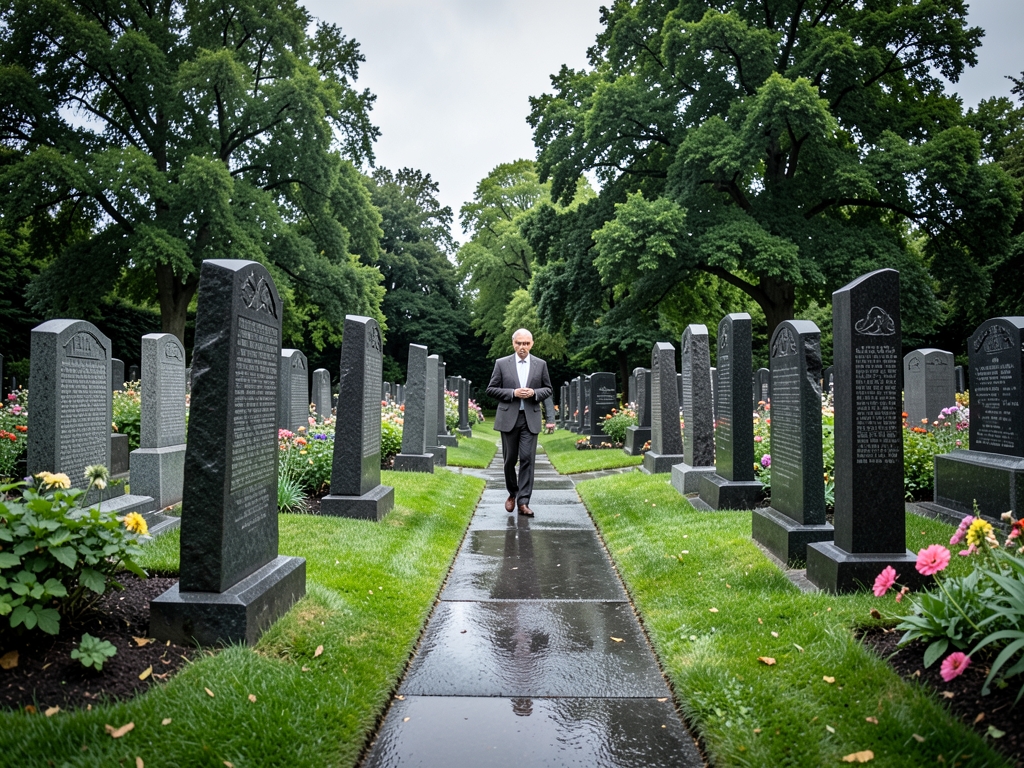
How the field creates meaning
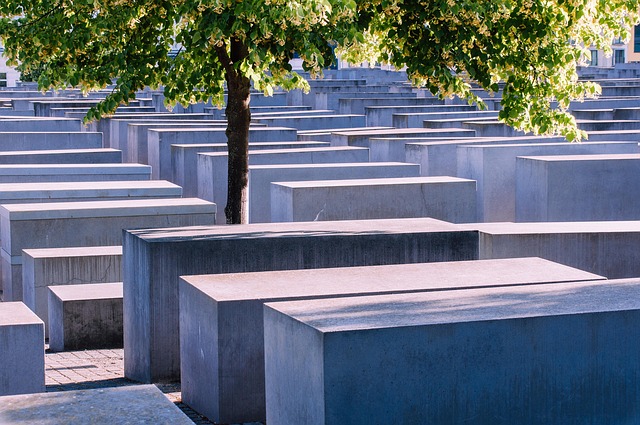
Peter Eisenman’s National Holocaust Monument operates as a modular field, not as a single focal object. Its meaning emerges through a deliberate sequence: you first approach the site, then cross an open threshold into a field of concrete stelae, move among them, and finally return toward the edge. Each stage changes your relationship to the memorial. The approach establishes it as part of everyday civic space; entry shifts you from the street into a structured commemorative landscape; movement makes you choose a route; and the return allows the experience to register as a spatial whole. A useful check is whether you can retrace those stages afterward without relying only on the view from one location.
The grid is therefore an active reading system. Before walking deeper, identify your entry point, notice where the paths narrow, and look for stelae whose placement creates alignment, interruption, or long sightlines. These features do not point toward one object that “explains” the Holocaust for you. Instead, they guide attention through relations: a nearby block restricts vision, a break opens the field, and an aligned sequence draws you onward. Move slowly enough to notice at least one transition from relative openness to compression and one view that suddenly extends across the site. If you rush directly from the perimeter to a prominent vista, you miss the mechanism that makes the field meaningful.
Stiftung Denkmal presents the site through three connected functions: remembrance, education, and resilience. Remembrance supports the need to confront the Holocaust and honor its victims; education makes historical knowledge part of public encounter; resilience expresses a commitment to democratic and civic responsibility. The field translates those functions into behavior. Remembrance emerges through sustained attention, education through route-making and spatial interpretation, and resilience through the visitor’s return to a shared civic environment. Before leaving, test whether the visit did more than produce an emotional impression: can you explain how the sequence carried those purposes?
Use the monument primarily for embodied reflection: enter deliberately, observe how the field changes, walk beyond its most recognizable views, and complete a return movement. If artifacts, survivor testimony, or chronological context must carry the visit, prioritize a museum or add one rather than treating the stelae field as a substitute.
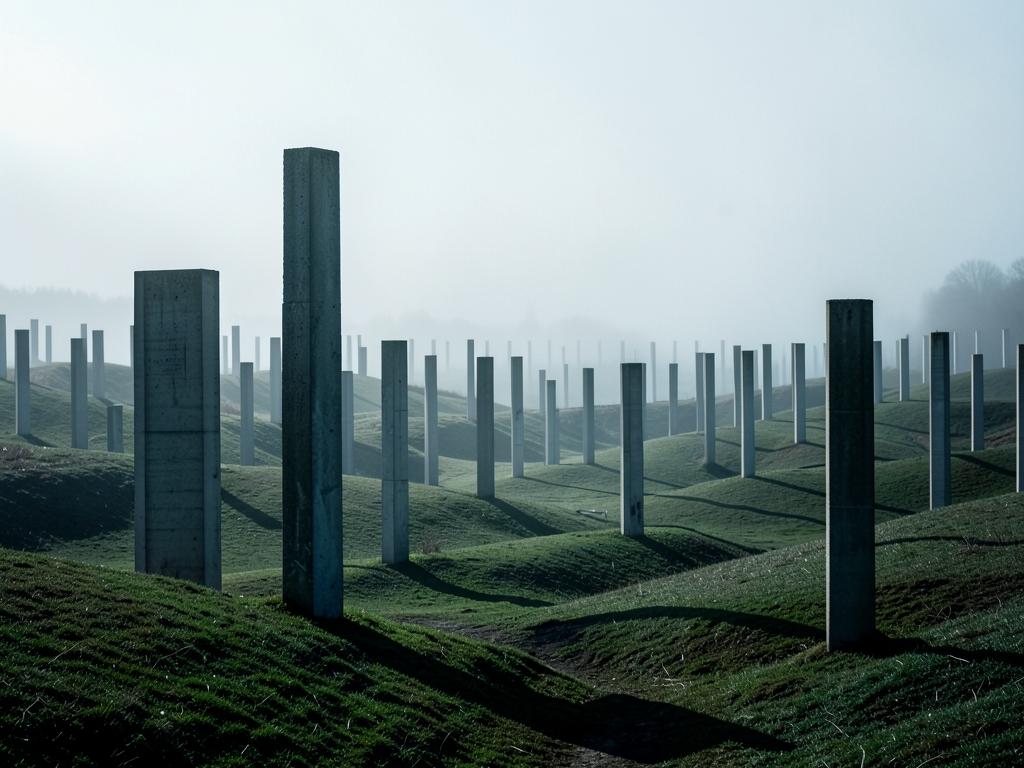
What the strongest evidence shows
The monument’s 2,711-stelae field offers an experience centered on architecture, scale, repetition, procession, and movement. It is most suitable when embodied reflection is the primary objective; visitors seeking surviving objects, testimony, or chronological context should prioritize a museum.
The monument functions as both a commemorative artwork and a civic gathering place. Stiftung Denkmal reports that Israel’s president Isaac Herzog and Germany’s president Frank-Walter Steinmeier gathered at the field of stelae in 2025 for a memorial act with wreath-laying. That public use is evidence that the site serves beyond private tourism: it can host formal acts of remembrance as well as individual visits. The reported gathering does not guarantee that a visitor will encounter an event, but it helps show the range of purposes the place serves.
Light is a useful planning consideration, not a reason to postpone a visit indefinitely. Early morning or late afternoon can bring softer light and longer shadows across the stelae, which may make their edges, spacing, and changing heights easier to read. Treat that effect as a possibility, not a promise: weather, season, and the light on the day will shape what you see. If visual detail matters to you, aim for one of those parts of the day when practical, but do not make ideal shadows a condition for going.
Apply the decision rule above: the monument is the stronger choice when at least 45 minutes are available for attentive movement and embodied reflection is the main aim. Prioritize or add a museum when historical evidence, testimony, or chronology matters more.
Choose monument, museum, or both
Compare the formats using the time-and-motive tests: reserve at least 45 minutes for the Berlin memorial when spatial reflection comes first; choose a museum when artifacts, testimony, or chronology come first; include both only when at least 90 minutes are available and the day can remain unhurried.
| Format | Best for | Winner when |
|---|---|---|
| Berlin memorial | Spatial reflection and architecture | Embodied reflection is your primary goal |
| Holocaust museum | Objects, testimony, and chronology | Historical evidence is your primary goal |
| Both | Context plus spatial processing | You have 90+ minutes and can pace the day |
Choose the monument alone when you can give it an uninterrupted block of attention. Treat it as the main purpose of that part of your day, not as a brief gap-filler between other plans. If your priority is embodied reflection, adding a museum is optional rather than a prerequisite.
Choose a Holocaust museum instead when you need surviving objects, personal testimony, or a chronological account to build your understanding. That is the better match if you want historical evidence to lead the visit. Check the museum’s current exhibition information before you go so you can confirm that its presentation fits the kind of learning you are seeking.
Choose both when you want museum context before or alongside the memorial and can leave enough room to move between the two without rushing. The 90+ minute threshold is a planning floor for this combined option, not a promise that every visit will feel unhurried. If your available time is tight, prioritize one format rather than trying to compress both.
Use the three-part format test: select the memorial when reflection comes first and at least 45 uninterrupted minutes are available; select a museum when evidence comes first; include both only when at least 90 minutes can be allocated without rushing.

Costs, timing, and access checks
Start with a 2026 cost check: treat the memorial’s admission charge, if any, and the fare required to reach it as separate items to verify rather than assume. An older visitor guide, a general tourism page, or a transport estimate is not enough. Before departure, open the monument’s official visitor page and confirm that it is open on your planned date and time, note any access restrictions, and check whether admission requires payment or another procedure. The available material does not establish 2026 hours or fees, so rely on what the official page states when you check.
Price the actual journey on an official transport map or journey planner, using your real starting point and the memorial as the destination. Select the applicable ticket type rather than choosing by price or convenience alone. A day ticket, local fare, and regional fare do not necessarily cover the same geography or travel conditions, so verify each ticket’s zones, validity period, and any transfer or time restrictions. A journey planner’s recommended route can help identify the likely requirement, but it does not replace the fare rules.
Reserve a self-selected 45–60 minute on-site window for focused reflection. Forty-five minutes is the minimum recommended allocation; choose the longer end if that better fits your schedule without turning the visit into a checklist. This window begins at the memorial, not at your departure point. Add margin for a sensitive stop rather than compressing the experience into an already tight connection, and keep transit, walking, and queuing time outside the on-site allocation. If the schedule offers less than 45 minutes at the site, move the visit rather than rushing it.
Run an access check after confirming the date. Review the official visitor information for restrictions or temporary notices that could affect the planned approach, and check the transport operator’s service alerts for disruptions on your route. Do not assume that a familiar entrance, nearby stop, or mapped path remains available simply because it appeared in an older guide. If either the memorial or transport status is unclear, resolve that uncertainty before committing to the journey.
Use a three-part go-or-revise rule before leaving: the official memorial page confirms access, the selected ticket covers the mapped journey, and at least 45 minutes remain for the site itself. Then set your spending ceiling using the verified admission and transport costs. If any of the three checks remains unresolved, treat the itinerary and budget as provisional rather than assuming that admission is free or that an existing pass covers the trip.
Where experience evidence fails
Use visitor accounts as evidence of possible reactions, not as a forecast for yours. The same repeated concrete field can prompt reflection, fatigue, overwhelm, or detachment, and none of those responses is the “correct” one. Before you go, ask whether you can stay attentive if your reaction differs from what you expected; if not, change the plan rather than treating a particular feeling as a measure of whether the visit succeeded.
Emotional variability and representational limits are the main reasons to change plans. The memorial can support reflection, but a visit should not be expected to answer every historical question. Write down what you want to learn: if the answer depends on surviving objects, testimony, or chronological context, do not assume the site experience will supply it. Use a museum or another historical source for that evidence.
Read twentieth-anniversary coverage as evidence of public attention, not proof that the memorial’s meaning is settled. The passage of time and the monument’s visibility do not resolve how individuals interpret it or how its historical significance should be understood. When a report describes a public response, check whose response it represents; do not treat it as a summary of what every visitor thinks or feels.
Do not let a striking photograph, an efficient route, or the count of 2,711 stelae make the decision for you. A photograph records one view, route efficiency measures movement, and the count gives a number; none establishes that this format matches your learning needs. Before committing, compare your question with what an embodied visit can offer. If your priority is reflection, allow time to engage with the place; if your question requires evidence the site cannot provide, adjust the plan instead of expecting the monument to stand in for it.
A forty-five-minute worked visit
Allow at least 45 minutes for a spatially guided visit, treating the time as a structure for attention rather than a target you must rush to meet. For a useful planning check, divide the field’s 2,711 stelae by its roughly 96.9-meter length: the result is about 28 stelae per longitudinal meter. This is only a planning diagnostic, not an official monument metric or a valid spacing claim. The stelae are not distributed uniformly along a measured line, so reject that number if you are trying to predict gaps, density, or walking intervals.
Spend the first 10 minutes locating the entrances, identifying your starting point, and orienting yourself to the field’s edges. Your goal is not to understand the entire site in advance, but to enter deliberately rather than drifting through. Before setting off, choose a fixed route with a clear destination. A circuit, a path from one edge toward the center, or a route ending at a particular stela can all work, provided each one lets you move without repeatedly renegotiating where to go next.
Use the middle 25 minutes to walk that route once, without treating the monument as a checklist. Notice where your pace changes, where the surroundings become quieter or more exposed, and where your attention repeatedly catches. Stay on public paths and give other visitors room to pause or pass. If a particular area feels crowded, widen your route rather than forcing an intimate encounter; spacious reflection depends on both attention and consideration.
Reserve the final 10 minutes for one stela you have already encountered. Return to it, stand at a respectful distance from neighboring visitors, and record what the walk changed in your understanding. A short note should answer one concrete question: Did the stela seem less like an isolated object after seeing the field from several positions? Did the route alter your sense of sequence, scale, or relation to others? Recording the change matters more than inventing an interpretive conclusion on the spot.
Use a simple threshold afterward: if 45 minutes leaves you feeling rushed rather than more attentive, extend the visit or pair the monument with a Holocaust museum. The monument is best for embodied reflection; museum visits add surviving objects, testimony, and chronological context. If those forms of historical learning are your main objective, devote more time to a museum. If your primary aim is to process space through movement and sustained attention, preserve the full 45-minute sequence here and do not allow the visit to become a hurried photo stop.
Use four final decision rules
First, apply the time test. In 2026, reserve at least 45 minutes for Berlin’s National Holocaust Monument if spatially guided reflection is your primary reason to visit. Give yourself enough time to move through the site without treating it as a quick photo stop. If you have less than 45 minutes, skip the compressed visit unless the monument is already directly on your route. A stop you cannot experience at an unhurried pace may offer less than a deliberate return would.
Second, apply the motive test. Choose a Holocaust museum first when you need surviving artifacts, recorded testimony, or a chronological account of the Holocaust before or alongside your memorial visit. A museum provides a different kind of historical learning, one organized around objects, voices, and contextual information. If you can return to Berlin’s monument later, use the museum as preparation: let its evidence and chronology deepen what you then encounter spatially. If you cannot return, prioritize the museum rather than forcing one site to satisfy both purposes.
Third, apply the access test. Do not assume that an outdoor site automatically provides an accessible or comfortable visit. Before going in 2026, check the memorial’s official visitor and access information for current conditions affecting mobility, walking surfaces, seating, sensory experience, or entry. Consider your particular needs, not only whether you can technically cross the site. If the field cannot be experienced comfortably or safely on that day, choose an alternative Holocaust-learning site with suitable access and stop there instead.
Finally, apply the companionship test. Decide in advance whether you want reflective solitude, a shared experience with someone who understands the site’s emotional weight, or simply a brief visit within a larger itinerary. Bring a companion if their presence helps you slow down and reflect; go alone if conversation would interfere with that aim. Then make the final call: at least 45 minutes, a primary desire for embodied reflection, and workable access support a visit; otherwise, choose a museum or another accessible Holocaust-learning site.
What to do next
| Step | Action | Why it matters |
|---|---|---|
| 1 | Visit Berlin’s National Holocaust Monument in 2026 if embodied reflection is your primary goal. | The memorial is designed as a spatial experience rather than an artifact-focused historical visit. |
| 2 | Reserve at least 45 minutes to move through the monument’s field of stelae. | The field of stelae is the central commemorative space and supports a spatially guided reflection. |
| 3 | Choose a Holocaust museum instead when surviving objects, survivor testimony, or chronological context are your main priorities. | The memorial is strongest for embodied reflection, not artifact-based historical learning. |
| 4 | Pair the National Holocaust Monument with a Holocaust museum when you want both reflective space and historical context. | The combination covers the memorial’s commemorative experience alongside testimony, objects, and chronology. |
| 5 | Plan your visit around the Berlin memorial’s field of stelae rather than treating it as a brief photo stop. | Allowing time for the central commemorative space gives the memorial’s reflective purpose room to unfold. |
Frequently Asked Questions
How long should I allow to visit the National Holocaust Monument?
Allow at least 45 minutes, which is the recommended minimum for spatially guided reflection.
Is 45 minutes enough if I want to focus on historical artifacts?
No; if artifacts are your main priority, choose a museum or add a Holocaust museum to your visit.
What kind of experience is the National Holocaust Monument best suited for?
It is strongest for embodied reflection rather than artifact-based historical learning.
Should I visit a Holocaust museum alongside the monument?
Yes, pair the site with a museum when surviving objects, survivor testimony, or chronological context matter to your visit.
Why is the field of 2,711 concrete stelae central to the memorial experience?
The monument functions as a modular field rather than a single focal object, and its meaning emerges through a deliberate sequence of approach, entry, movement, and return.
What happens as I move through the field of stelae?
Movement among the stelae makes you choose a route, changing your relationship to the memorial as you move through the commemorative landscape.
Quick answers
| How long should visitors reserve for the National Holocaust Monument? | Reserve at least 45 minutes for the Berlin memorial. |
| When is the National Holocaust Monument strongest? | The memorial is strongest for embodied reflection, not artifact-based historical learning. |
| When should visitors add a Holocaust museum to their visit? | Add a Holocaust museum when you need testimony or chronology. |
| What is the central commemorative space of the memorial? | The field of stelae is the central commemorative space. |
| How is the National Holocaust Monument designed? | Peter Eisenman’s National Holocaust Monument operates as a modular field, not as a single focal object. |
Also worth reading: Why the Hilton Frankfurt Airport is the most convenient hotel for international travelers: Why the Hilton Frankfurt Airport · Carrasco International Airport Uruguay's Gateway Celebrates 15 Years of Modern Terminal Operations in 2024: Carrasco International Airport Uruguay's Gateway · A Century of Learning International House Sydney's Heritage-Listed York Street Building Marks 111 Years of Education Excellence: Century of Learning International House